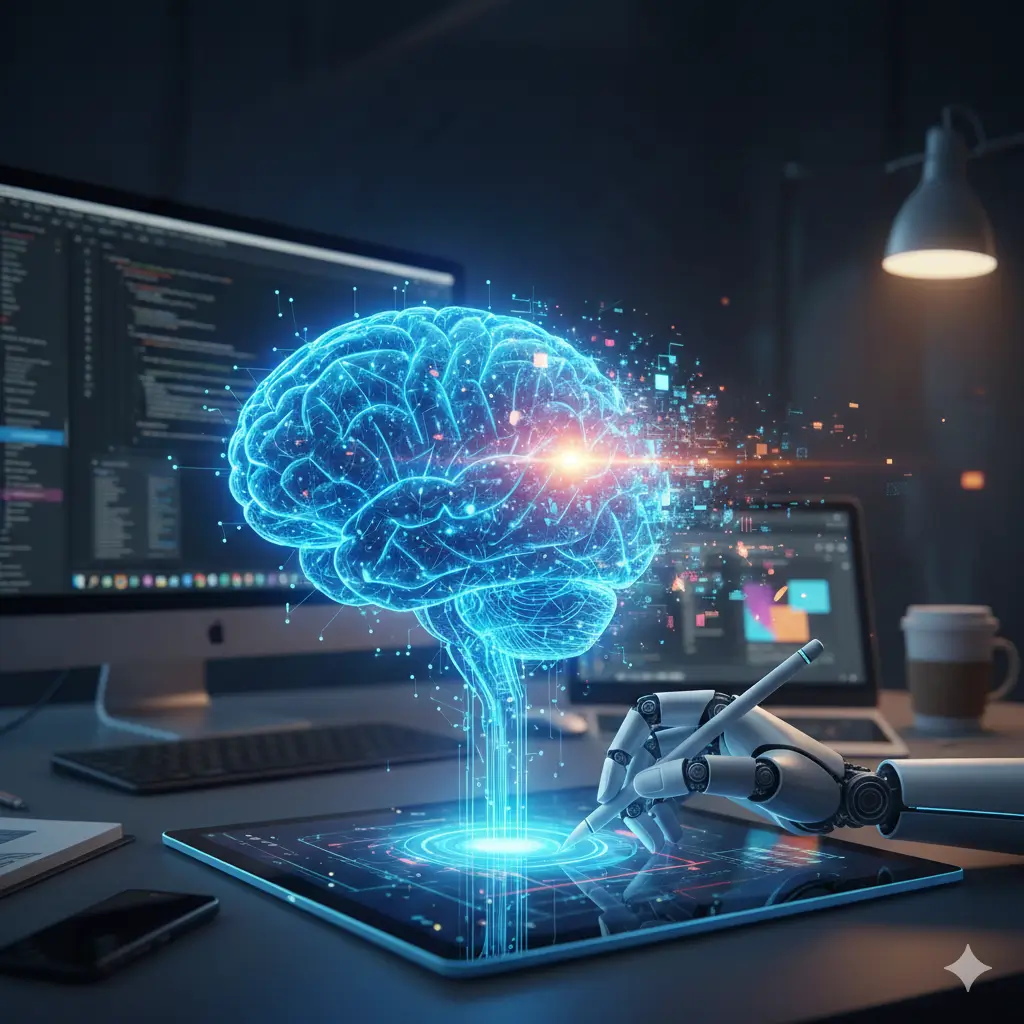
A Realistic View for UK Businesses & Creative Professionals
Artificial Intelligence has entered almost every creative industry, and graphic design is no exception. With AI tools now capable of generating logos, layouts, illustrations, and social media creatives within seconds, a common question is being asked across the UK creative market:
Will AI replace graphic designers in 2026?
The short answer is no, but the full picture is far more important for businesses and designers to understand.
This blog explores how AI is changing graphic design, what it can and cannot replace, and what the future realistically looks like for designers and UK businesses.
How AI Is Changing Graphic Design?
AI has significantly improved design speed and accessibility. Tasks that once required hours of manual work can now be completed in minutes.
Today, AI is commonly used to:
- Generate quick visual concepts
- Automate resizing and formatting
- Assist with colour suggestions and layouts
- Speed up repetitive production tasks
For UK businesses, this means faster turnaround times and lower entry barriers. For designers, it means workflows are evolving, not disappearing.
AI is changing how design is created, not removing the need for designers.
What AI Can Do Well (And Where It Stops)?
AI is effective when tasks are structured, predictable, and data-driven. However, design goes beyond execution.
AI Performs Well At:
- Template-based designs
- Social media graphics at scale
- Background removal and image enhancements
- Generating variations from prompts
AI Struggles With:
- Original brand identity creation
- Emotional storytelling
- Cultural context (especially UK-specific audiences)
- Strategic visual decision-making
- Understanding business goals beyond instructions
Design is not just visuals; it’s communication with intent.
Why Human Graphic Designers Still Matter?
Despite rapid AI progress, professional designers remain essential for several reasons.
1. Brand Strategy Cannot Be Automated
Strong branding requires understanding audience psychology, market positioning, and long-term business goals. AI does not understand brands; designers do.
2. Creativity Is More Than Output
AI generates based on existing data. Designers create new meaning, original concepts, and visual narratives that resonate emotionally with real people.
3. Human Judgment Drives Results
Design decisions often rely on instinct, experience, and interpretation, things AI cannot replicate.
For UK businesses competing in saturated markets, human-led design creates differentiation, not automation alone.
Will Graphic Design Jobs Disappear by 2026?
The reality is more balanced.
What Will Change:
- Basic design tasks may become automated
- Designers who resist learning AI tools may struggle
- Entry-level execution roles may evolve
What Will Grow:
- Brand-focused design roles
- UX and conversion-driven design
- Creative strategy and visual storytelling
- Designers who combine creativity with AI efficiency
Designers who adapt will not be replaced; they will be more valuable.
What does this mean for UK businesses?
For UK companies, AI should be seen as a support tool, not a replacement for expertise.
Businesses that rely only on AI-generated design risk:
- Generic branding
- Lack of originality
- Weak emotional connection with audiences
Businesses that combine AI tools with professional designers benefit from:
- Faster production
- Strong brand identity
- Better customer engagement
- Higher trust and credibility
AI speeds execution, designers drive impact.
The Future of Graphic Design in 2026
By 2026, graphic design will be a hybrid profession.
- AI will handle repetitive tasks
- Designers will focus on creativity, strategy, and experience
- Businesses will demand design that connects, not just looks good
The most successful designers will be those who use AI, not compete against it.
Final Thoughts
AI will not replace graphic designers in 2026, but it will replace outdated ways of working.
Graphic designers who:
- Understand branding
- Think strategically
- Adapt to new tools
- Focus on human connection
will continue to thrive. This is exactly the approach followed at BizGrow Digital, where strategic thinking and modern tools work together to create designs that connect, convert, and build long-term brand value.